14 May, 2013
Where Some T.S. Eliot Lines are Just The Thing
Posted by
Jess
at
2:01 PM
0
comments
Labels: faith, literature, London, Where
27 February, 2013
40-Day Bare Face: Day 13 - Waterlogged
I. Don't. Belong. Here.
Posted by
Jess
at
2:09 PM
2
comments
Labels: Annie Dillard, faith, Lent, literature
20 February, 2013
40-Day Bare Face: Day 7 - Hallowed
LOVE (III)
by George Herbert
Love bade me welcome, yet my soul drew back,
Guilty of dust and sin.
But quick-ey'd Love, observing me grow slack
From my first entrance in,
Drew nearer to me, sweetly questioning
If I lack'd anything.
"A guest," I answer'd, "worthy to be here";
Love said, "You shall be he."
"I, the unkind, the ungrateful? ah my dear,
I cannot look on thee."
Love took my hand and smiling did reply,
"Who made the eyes but I?"
"Truth, Lord, but I have marr'd them; let my shame
Go where it doth deserve."
"And know you not," says Love, "who bore the blame?"
"My dear, then I will serve."
"You must sit down," says Love, "and taste my meat."
So I did sit and eat.

Posted by
Jess
at
12:29 PM
0
comments
Labels: faith, glamour, Lent, literature
01 July, 2010
E is for Empty Space
I decided the empty space in my life needed renovating. It caused me a great deal of grief and anxiety, made worse by my poor attempts to fill it with the wrong things.
Slowly, I changed the way I thought about "emptiness".
I read an Annie Dillard piece about changing seasons--how she longed for "the North where unimpeded winds would hone me to a pure slip of bone." She says, "Winter is the real world, not the world gilded and pearled." The emptiness indicates a kind of purity, the completion of "a reduction, a shedding, a sloughing off."
"I stand under wiped skies directly, naked, without intercessors. Frost winds have lofted my body's bones with all their restless sprints to an airborne raven's glide. I am buoyed by a calm and effortless longing, an angled pitch of the will..."
I, too, am buoyed by a calm and effortless longing - it's the empty space. Once identified as such, I no longer needed to destroy the empty space by filling it.
Dillard continues, " The death of the self of which the great writers speak is not violent act. It is merely the slow cessation of the will's sprints and the intellect's chatter. It is waiting like a hollow bell with a stilled tongue...The waiting itself is the thing."
The bell can only ring because of the empty space between its tongue and the walls. And ring it will, but at the ordained moment - the waiting itself is the thing.
Maybe the empty space is less like a prison cell and more like a waiting room.
Henri Nouwen speaks of an important conversion for emptiness--that of loneliness to solitude. One of the hallmarks of my empty space had been what Nouwen calls an "essential aloneness which so often breaks into our consciousness as the experience of a desperate sense of loneliness...It drives us to demand more from our fellow human beings than they can give."
He instructs, "Instead of running away from loneliness and trying to forget or deny it, we have to protect it and turn it into solitude. To live a spiritual life, we must first find the courage to enter into the desert of our loneliness and to change it by gentle, persistent efforts into a garden of solitude. It is the movement from the restless senses to the restful spirit, the outward cravings to the inward-reaching search, from the fearful clinging to the fearless play."
I have become more certain of our innate resistance to empty spaces. My spiritual experience suggests that the more innate my resistance, the more likely my own will is working against my search for peace. The conversion of the dark and empty space to a brilliant garden of solitude is critical. Nouwen points out that "the temptation is indeed very great to take flight into an intimacy and a closeness that does not leave any open space. Much suffering results from this suffocating closeness." Instead of being driven by panic and despair to fill it, I've made a vigilant commitment to always maintain an empty room, with open windows to welcome the bitter, yet purifying North wind.
Posted by
Jess
at
8:41 PM
0
comments
Labels: alphabet, faith, literature
15 June, 2010
A is for Annie Dillard, Continued
In my last post, I mentioned that Annie Dillard wrote my favorite two pages in anything I've ever read. I don't know if they'll be as powerful for you as they were for me, and I'm sure I don't have permission to post them, but there they are:
Thomas Merton wrote, "There is always a temptation to diddle around in the contemplative life, making itsy-bitsy statues. " There is always an enormous temptation in all of life to diddle around making itsy-bitsy friends and meals and journeys for itsy-bitsy years on end. It is so self-conscious, so apparently moral, simply to step aside from the gaps where the creeks and winds pour down, saying, I never merited this grace, quite rightly, and then to sulk along the rest of your days on the edge of rage. I won't have it. The world is wilder than that in all directions, more dangerous and bitter, more extravagant and bright. We are making hay when we should be making whoopee; we are raising tomatoes when we should be raising Cain, or Lazarus.
Ezekiel excoriates false prophets as those who have "not gone up into the gaps." The gaps are the thing. The gaps are the spirit's one home, the altitudes and latitudes so dazzlingly spare and clean that the spirit can discover itself for the first time like a once-blind man unbound. The gaps are the clifts in the rock where you cower to see the back parts of God; they are the fissures between mountains and cells the wind lances through, the icy narrowing fjords splitting the cliffs of mystery. Go up into the gaps. If you can find them; they shift and vanish too. Stalk the gaps. Squeak into a gap in the soil, turn, and unlock-more than a maple-a universe. This is how you spend this afternoon, and tomorrow morning, and tomorrow afternoon. Spend the afternoon. You can't take it with you.
I live in tranquility and trembling. Sometimes I dream. I am interested in Alice mainly when she eats the cooky that makes her smaller. I would pare myself or be pared that I too might pass through the merest crack, a gap I know is there in the sky. I am looking just now for the cooky. Sometimes I open, pried like a fruit. Or I am porous as old bone, or translucent, a tinted condensation of the air like a watercolor wash, and I gaze around me in bewilderment, fancying I cast no shadow. Some-Page 2
PILGRIM AT TINKER CREEK
times I ride a bucking faith while one hand grips and the other flails the air, and like any daredevil I gouge with my heels for blood, for a wilder ride, for more.
There is not a guarantee in the world. Oh your needs are guaranteed, your needs are absolutely guaranteed by the most stringent of warranties, in the plainest, truest words: knock; seek; ask. But you must read the fine print. "Not as the world giveth, give I unto you." That's the catch. If you can catch it it will catch you up, aloft, up to any gap at all, and you'll come back, for you will come back, transformed in a way you may not have bargained for-dribbling and crazed. The waters of separation, however lightly sprinkled, leave indelible stains. Did you think, before you were caught, that you needed, say, life? Do you think you will keep your life, or anything else you love? But no. Your needs are all met. But not as the world giveth. You see the needs of your own spirit met whenever you have asked, and you have learned that the outrageous guarantee holds. You see the creatures die, and you know you will die. And one day it occurs to you that you must not need life. Obviously. And then you're gone. You have finally understood that you're dealing with a maniac.
I think that the dying pray at the last not "please," but "thank you," as a guest thanks his host at the door. Falling from airplanes the people are crying thank you, thank you, all down the air; and the cold carriages draw up for them on the rocks. Divinity is not playful. The universe was not made in jest but in solemn incomprehensible earnest. By a power that is unfathomably secret, and holy, and fleet. There is nothing to be done about it, but ignore it, or see. And then you walk fearlessly, eating what you must, growing wherever you can, like the monk on the road who knows precisely how vulnerable he is, who takes no comfort among death-forgetting men, and who carries his vision of vastness and might around in his tunic like a live coal which neither burns nor warms him, but with which he will not part.
* * *
Posted by
Jess
at
7:15 PM
0
comments
Labels: alphabet, faith, ideas, literature, truth
21 June, 2009
Top-five Literary Men
I was thinking about things I wanted to bring back from Ireland, and a souvenir named Conor Larkin is among them. That will be difficult because Conor's an Irish, rugby-playing, artisan blacksmith and poet from Northwest Ireland--and also from Leon Uris' fictional work Trinity. I can't bring home a fictional man, obviously, even if he is the man of my dreams.
He's also not the only literary male on whom I've had a small crush. Fiction or no, I find the following men very attractive:
- Mr. Rochester, from Jane Eyre
- Hector, from the Illiad
- Rob, from High Fidelity
- John Keats
- T.S. Eliot
- Pablo Neruda
Posted by
Jess
at
9:22 PM
0
comments
Labels: literature, men, top-five
06 June, 2009
Poetry and Prayer
Reading Yancey's book on the relevance of prayer, I spent time with his section on "The Grammar of Prayer," where he explains ways we can pray effective, theologically-sound prayers, even when we don't "feel like" praying.
One method is to use scriptural prayers or the fixed, liturgical prayers that are part of something like a Book of Hours. But then he made an interesting departure, and pointed to the 17th and 18th century English poets that can lead the heart into prayer much the same way--poets like John Donne and George Herbert, but also hymnodists like John Newton and William Cowper.
I also came across Cowper in the archives of some other blogs I read, where they reflect on the role of poetry and spirituality in dealing with insanity.
Pleased to see some of my favorite poets mentioned in unexpected places, I remembered I'd purchased a 1st-edition volume of Cowper's poetry at a bookshop in Paris for a Euro several years ago.
I'm familiar with Cowper's typically anthologized pieces like "Light Shining out of Darkness", but this collection offered gems outside his traditional devotional verse: "Lines Written During a Period of Insanity", "An Ode to Peace", "Human Frailty", and "Impromptu on Writing a Letter Without Having Anything to Say".
The critic in the introduction supposes that Cowper's poems are often overlooked because they're preoccupied with his defense against his own madness. Since all his efforts go to reconciliing what his mind and emotions tell him with the reality offered by Christianity, he never gets to extend his genius into the realm of creativity and imagination that would have brought him distinction.
It's these "Miscellaneous Poems," as they're categorized in the Table of Contents, in which we get a picture of the day-to-day life someone who was likely bi-polar and manic-depressive but still clung to God. We see someone actually in spiritual battle with forces of darkness in himself.
In my consideration of the role of spirituality and insanity, this makes me recall what Paul says in Ephesians about how we're not at war with flesh and blood but with forces of darkness that are not of this world.
I realize have a tendency toward these emtional extremes. I have been struggling with a relationship lately regarding its purpose and my prayers for it. Sometimes I am seized by this heart-sickening darkness and frustration that seems to be, in scale, unmerited by the context and situation. The darkness I feel seems utterly irrelevant, sometimes, to both the specific problem and the truth and power of the gospel.
Much of Cowper's reconciliation between madness and the Gospel is tempering his passions and self-condemnation with the reality of Grace and Mercy and Peace. When he does this, he composes the evocative devotional poems for which he is famous. In these, the poetic turns and movements that make them clever, crafted poems also reveal the power and purpose of prayer. Instead of tracing the movement of an idea, we see the movement of the Holy Spirit in a conversation with God.
Without the role played by the Holy Spirit, prayer is just a conversation a madman has with himself. And without the Holy Spirit, that conversation would not have the power to transform our torment into "Thy will be done" as we saw in Gethsemane.
Spending all morning with this volume, I can see the shame and hatred Cowper has with his own madness. But he illuminates the darkness in a way only he can. And I think the editor of the volume, who relegated Cowper's work as waste of genius has it wrong. Cowper joins the ranks of the other Hand-Picked saints with disabilities--the ones with thorns in their sides--who glorify God more because of their brokenness than anyone else could have without it.
In times of strain and darkness, I'm using Cowper's poems as the base for the prayers I don't "feel like" praying. In his struggle, I'm finding words for my own. Thank God for the poems of Cowper that can lead us through that process of transformation, grounding dark emotions in Truth.
Posted by
Jess
at
10:14 PM
0
comments
Labels: faith, literature, truth
05 June, 2009
What I'm Reading
I came across the most annoying thing the other day: I was reading and in the middle of the book, for three chapters, the pages were out of order! 148, 152, 151, 150, 149, 153, 154, 155, 156, 161... and on. I have never had a book where the printing flaws were so debilitating! I figured it's because I only paid $.75 for it at a used book sale, but still! Someone should have put a warning sticker on McCarthy's Bar: Warning: This book was assembled by an Irishman who has had too much Guinness.
I have been plowing through a few other things since Christmas, and in honor of having just finished the school year, I thought I'd post the list of books I have a new capability finishing in the coming weeks (provided all of the pages are in order).
I'm well into, and sure to imminently finish:
Pilgrim at Tinker Creek, by Annie Dillard
The Writing Life, by Annie Dillard
McCarthy's Bar, by Pete McCarthy - a travel narrative to get ready for my trip!
The Dubliners, James Joyce
The Jesus I Never Knew by Phillip Yancey
Prayer: Does It Make Any Difference? by Phillip Yancey
For the Love of Ireland: A Literary Companion for Readers and Travelers by Susan Cahill
Posted by
Jess
at
2:51 PM
0
comments
Labels: books, literature, travelling, writing
06 March, 2009
Imagism and Transubstantiation
I read some more of Pilgrim at Tinker Creek this morning. I'm 2/3 of the way through it. It's summer in the book, and there's been a devastating flood because of a tropical storm.
Even her most benign descriptions move me, and I hardly ever know why.
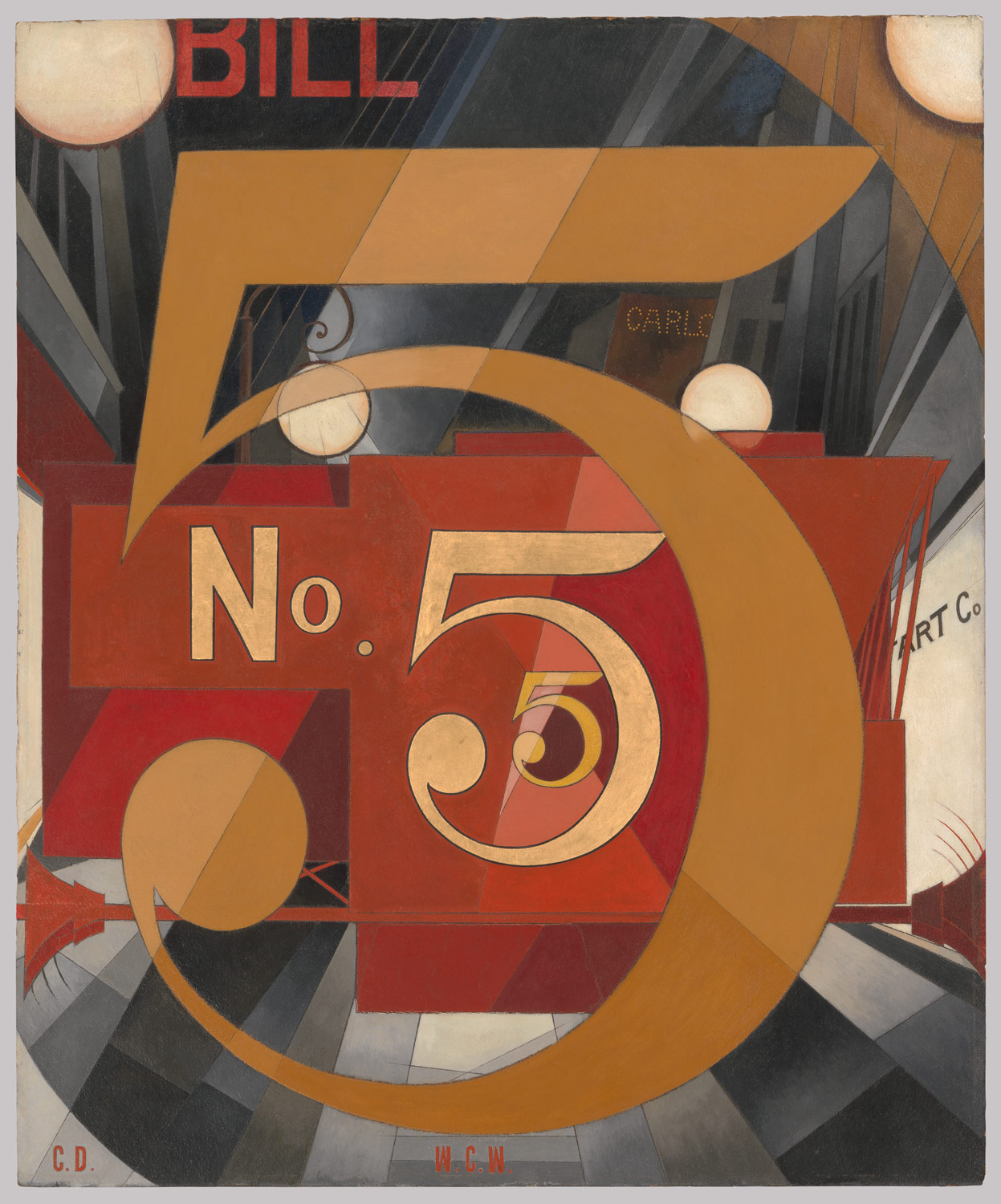
At the end of this week, we looked at the Art of Modernism in my AP Class: Hopper, Stieglitz, Okeefe, Demuth.
I showed Demuth's The Figure 5 in Gold and the corresponding poem by William Carlos Williams.
It reminded me how much I enjoyed the work I did in college on the Imagist poets, particularly Williams.
I love the aesthetics of vacillating between the literary line and the figurative one, and I'm fascinated by the emergence of meaning from the point where language meets visual perception. I think this is why I like Dillard so much: meaning emerges from the point where language meets biology and place--only with Dillard, the emergence is more of a transformation.
Her language does to nature what transubstantiation does to the bread and wine of the Eucharist.
Posted by
Jess
at
11:38 AM
0
comments
Labels: art, criticism, history, literature
31 December, 2008
For Those Wondering How I Spent My Break
Posted by
Jess
at
3:21 PM
0
comments
Labels: books, literature, photography, travelling, writing
22 November, 2008
Emerson and Prayer Part I
Those of you who read The Strand might have noticed my attention to the topic of prayer, recently. A colleague of mine pointed out a familiar quotation by Emerson on the subject:
"Prayer that craves a particular commodity,—any thing less than all good,—is vicious. Prayer is the contemplation of the facts of life from the highest point of view. It is the soliloquy of a beholding and jubilant soul. It is the spirit of God pronouncing his works good. But prayer as a means to effect a private end, is meanness and theft. It supposes dualism and not unity in nature and consciousness. As soon as the man is at one with God, he will not beg. He will then see prayer in all action. The prayer of the farmer kneeling in his field to weed it, the prayer of the rower kneeling with the stroke of his oar, are true prayers heard throughout nature, though for cheap ends."
I struggle with parts of this passage (which I'll get to later), but I appreciate his definition of prayer, "the beholding and jubilant soul,...the spirit of God pronouncing [H]is works good."
I think so often we make prayer really small--what we have in the postmodern me-centered Church starts to sound like a conversation between 2 people, which is prone to the viciousness and selfishness of Emerson's concern.
By definition, prayer is the soul's communication with the master and creator of the universe, permissible through the redemptive work of Death and Resurrection. I think we too often get the scale wrong, which leads us to seeking the "private end," resulting in "meanness and theft." Prayer becomes a wish-list, or a script, or a manufactured emotional validation for an ungodly cause. When we approach prayer as a "conversation," there isn't much to keep us from projecting fallen human sentiments on something wholly and holy Other--because a conversation presumes we do the talking.
In this sense, maybe we get the scale of worship wrong, too. In church, we carefully select songs, with particular rhythm and notes, to call out specific emotions and intellectual themes. This is too controlled. We seem to forget we are part of a much larger "conversation".
Prayer and Worship really happen when all of creation lives according to the fullest measure of its purpose. This is how "prayer of the farmer kneeling in his field to weed it, the prayer of the rower kneeling with the stroke of his oar" could be heard "throughout nature".
What was the first worship like? What were the first prayers? What was prayer and worship like before power structures? Before perverted collectivism? Post-modernism? Tithes and small-groups and potlucks and C,G,&E chords and Z88.3? Before we forced it into our tiny practices and contexts? Before we made what connects prayer and worship the "me" of it all?
Dillard and Emerson have both driven me to seek examples in the natural landscape. I find an illustration of the true, simple prayer and worship in the trees of my daily routine.
The trees reach deep into the surface of the earth--depend on it to live and grow--to where they hold up the sky. The enormous trees on our school's campus are so big they seem to fully support the great blue canopy. And if the canopy fell, it could be a great wall of water, a tsunami that wiped out everything, the walls of the Red Sea held in place by the wooden staff of Moses.
We need the trees above our front doors, above the bell tower, above the dorm, the dining hall, the classroom building, or the sky might cave in and we'd be lost. These trees are pillars, sentinels. I walk among them, but they are separate from me. They live according to their great purpose, connecting the earth to blue infinity.
I can imitate the trees: raise my hands like branches in prayer and worship or I can climb a tree like Zaccheus to see Jesus.
Posted by
Jess
at
9:38 PM
1 comments
Labels: faith, ideas, literature
14 November, 2008
The Witches of Macbeth
Posted by
Jess
at
10:15 PM
0
comments
Labels: glamour, literature, photography, students
13 November, 2008
Poetry Jam
Today I'm reading for the MVA Poetry Club's Poetry Jam that is part of Fine Arts Week. (I wish I had something of my own to read, but I can't afford to dwell there today.)
I am reading these three poems I found on the Underground in London:
'I saw a man pursuing the horizon'
I saw a man pursuing the horizon
Round and round they sped.
I was disturbed at this;
I accosted the man.
"It is futile," I said,
"You can never--"
"You lie," he cried,
And ran on.
--Stephen Crane (1871-1900)
The London Eye
Through my gold-tinted Gucci glasses,
the sightseers. Big Ben's quarter chime
strikes the convoy of number 12 buses
that bleeds int the city's monochrome.
Through somebody's zoom lens, me shouting
to you, "hello...on...bridge...'minster!"
The aerial view postcard, the man writing
squat words like black cabs in rush hour.
The South Bank buzzes with a rising treble.
You kiss my cheek, formal as a blind date.
We enter Cupid's Capsule, a thought bubble
where I think, "Space age!", you think "She was late."
Big Ben strikes six, my SKIN. Beat blinks, replies
18.02. We're moving anti-clockwise.
Patience Agbabi (b.1965)
from Ode: Intimations of Immortality
THERE was a time when meadow, grove, and stream,
The earth, and every common sight,
To me did seem
Apparell'd in celestial light,
The glory and the freshness of a dream.
It is not now as it hath been of yore;—
Turn wheresoe'er I may,
By night or day,
The things which I have seen I now can see no more.
The rainbow comes and goes,
And lovely is the rose;
The moon doth with delight
Look round her when the heavens are bare;
Waters on a starry night
Are beautiful and fair;
The sunshine is a glorious birth;
But yet I know, where'er I go,
That there hath pass'd away a glory from the earth.
--William Wordsworth (1770-1850)
AND IF WE HAVE TIME...
One Perfect Rose
A single flow'r he sent me, since we met.
All tenderly his messenger he chose;
Deep-hearted, pure, with scented dew still wet -
One perfect rose.
I knew the language of the floweret;
'My fragile leaves,' it said, 'his heart enclose.'
Love long has taken for his amulet
One perfect rose.
Why is it no one ever sent me yet
One perfect limousine, do you suppose?
Ah no, it's always just my luck to get
One perfect rose.
--Dorothy Parker (1893-1967)
Posted by
Jess
at
8:39 AM
0
comments
Labels: classroom, literature, London
18 October, 2008
Ramblings
- I just watched the movie Once, and it was as lovely as everyone said. Its earnestness was captivating. As I watched the Dublin scenery, it made me really excited for the trip to Ireland I'm planning. But then I thought the Dublin in the movie does not exist in the touristy city-centre where I'll likely be. I'd have to live there to find it. I remember seeing that landscape in Belfast--gritty, working-class, hardened. I was drawn to it, but as a foreigner, there was nothing to draw me in. And I just wished something that seemed so real wasn't so off-limits to me.
- I went to a gargantuan book sale today in Gainesville, and I had to quit buying books when, with a box and a bag, I had more than I could physically carry. And, while I'm excited about my finds, the finding and buying them was a surreal experience. Suffice to say I don't suffer crowds well to begin with, and this place was third-world crowded. The prices were so low and the searching was so aggressive, it felt more like looting than buying. And all at once we were the Yahoos from Swift's Gulliver's Travels. I wondered what the Houyhnhnms would think if they saw us. They'd think the hundreds of book grubbers looked like they were digging useless things from the earth for the sake of greed and competition.
But these things were books--and classics and textbooks at that! The very things that are supposed to redeem us from the ignorance that begets greed and mindless competition. It was jarring to see this frenetic tableau paired with and created for its opposite, reading and contemplation. While I wanted to flee the debasing of the Books, I thought they're probably just books, and I bought a box full. - I've been wondering what to live for. And the weight of "purpose" resembles the weather--English weather. There are days of brilliant sunshine that soak the wild daffodils, where everything is clear and in sharp focus. Then there are some days of continual, relentless rain with the kind of piercing cold that makes you feel bruised from the inside out. But most days are in the middle, dry but overcast--not darkness but greyness.
- Today I considered whether I could have / would have been friends with Holden Caulfield. And I don't think so. I think people who cite Catcher in the Rye as their favorite book might have missed the point. That child--and I do mean child--lives in a peculiar hell he made for himself.
Posted by
Jess
at
10:17 PM
0
comments
Labels: books, England, literature, music, travelling