Finding the Art in Everything


Showing posts with label alphabet. Show all posts

28 October, 2011

P is for Providence

In class, as we were working on models of creation and scientific reconciliation, we were challenged to choose one and defend it. I find these decisions difficult, but as I wrestled with it, a new standard occurred to me: I’m not just looking for truth, I’m looking for a truth I can live with. This makes all the difference when defining my own worldview: a worldview isn’t merely a set of ideas I comprehend and occasionally reference. It’s the set of ideas I’ve decided to live with, for better or worse.

In the creation exercise, I chose the pictorial day theory of reconciliation. This suggests that God revealed to Moses the sequence of creation in a series of visions, and Moses chose to organize and communicate them in terms of days. As a writer and an artist, the literary framework theory fits my context the best—it works in image and metaphor. Beyond its personal appeal, I chose it because it offers the most amount of space for both science and scripture to live in. It doesn’t insist on scientific proof we’ll never have, such as the exact age of the earth. It also doesn’t let the science we do have threaten the claims of the bible. It still follows a logical, recognizable ordered pattern, which is congruent with our scientific observations in creation, and our spiritual ones about God’s nature. But most important, it liberates the conversation from the confines of the literal six days hog-tied to soteriology. The credibility of a bible I’m willing to live with depends upon much more than the claim of 6 days. Questioning 6 literal days does not undermine the bible’s authority as much as pitting it against science, in my view, unnecessarily.

I then turned my attention to the doctrine of Providence I sifted through the ideological possibilities and measured those views against my world. I realized I’m unwilling to live with the idea of limited providence. A God I’ll stake my life on must offer comprehensive control or provision that is utterly independent from all other forces—a provident omniscience, omnipresence, and omnipotence that is subject to nothing, especially not me. Also, I can’t live with a reality that selectively includes Divine influence and assistance. I’m too aware of natural evil, the general moral evil, and my own faults and frailty. If God is our only hope, we can only hope that He is everywhere, working in everything, all the time.

Yet, I realize I can’t live with the idea that God eliminates or limits genuine human freedom. A divine totalitarian is inconsistent with both human behavior and His own definition of Love. Inherently, some aspects of love are voluntary. Observable reality shows that our choices have effects, and often painful effects from poor ones. If freedom is genuine, we must be permitted to choose poorly. Yet, I recall a set of historical political illustrations from the Great Depression that Norman Rockwell created for FDR. They were called the “Four Freedoms” and they changed the definition of American Freedom. They shifted the definition of Freedom from “Freedom to…” to “Freedom from…”. Not only should we be free to choose our leaders, but we should be free ­from fear and hunger. When I think about God’s capability to make us free from that which torments our earthly existence, I am not sure I’m unwilling to sacrifice my volition for the guarantee of peace and provision. I’m not impressed by what human volition has earned us.

This is partly why I have difficulty with the discussion of freedom and human will so commonly confined, again, to soteriological matters. I’m thinking of conversations that involve flowers and five points. They seem to trivialize the definition of freedom and our dilemma. Perhaps it would be better to begin the conversation with providence and extend it to soteriology, not work backwards from it. But I think it would be best to start the conversation with Jesus, who models the only conceivable solution to the quandary. God’s providence is deeply connected to freedom, yet the nature of freedom is deeply voluntary. And the consequences of (at least) human volition threaten or ruin the freedom and goodness He’s offered. However, if we voluntarily surrender our volition to God, praying “Your will be done”, as Jesus did, then freedom and will are reconciled. And that is a reconciliation I can live with.

12 March, 2011

I is for Israelites

No one tells you that freedom first feels like death.

I met with my spiritual director this week and confessed that I want to go home every day. And I have wanted to turn around and go home nearly every day since I got here. Those of you who get postcards from me don't really get ones that say that. But I do. I drive around, taking in the beauty of Marin, and still saying aloud to myself, "I want my old life back." I am weary, lonely, lost, and worried. I miss my cute apartment, my space, my family, my friends, my job, my security, my spaniel, the familiarity, the comfort in a way that bears down on me like a physical weight. And while I know my "old life" is impossible to retrieve, it's the only name I can put on the relief I crave.

When I explained this to my spiritual director, he said, "I bet you're asking God, 'Did you bring me out here to die?!?'"

YES! That's exactly what I was wondering. Did God bring me here to die?!?

He smiled and showed me that this is not the first time God has heard that question. The Israelites asked it too.

It's a fool's errand to seek the specific place in Exodus where that happens: They ask it of God an embarrassing number of times, and when God's astounding miracles are shamefully recent. They ask it right before God opens the Red Sea, and a week after eating the meat and bread he provides in the desert.

I can see why they do this. Did God bring them there to die? If the answer is no, then why are these circumstances surprisingly brutal? If the answer is is yes, then that idea is unacceptable. We'd prefer Egypt, thanks.

But the answer is yes, and preferring Egypt, in light of God's mercy, is the unacceptable thing.

Paul suggests that this pain is not the pain of abandonment, but the pain of something else:

[8] We are afflicted in every way, but not crushed; perplexed, but not driven to despair; [9] persecuted, but not forsaken; struck down, but not destroyed; [10] always carrying in the body the death of Jesus, so that the life of Jesus may also be manifested in our bodies. [11] For we who live are always being given over to death for Jesus' sake, so that the life of Jesus also may be manifested in our mortal flesh. [12] So death is at work in us, but life in you...[16] So we do not lose heart. Though our outer self is wasting away, our inner self is being renewed day by day. [17] For this light momentary affliction is preparing for us an eternal weight of glory beyond all comparison, [18] as we look not to the things that are seen but to the things that are unseen. For the things that are seen are transient, but the things that are unseen are eternal. (2 Corinthians 4:8-18 ESV)

C.S. Lewis writes my favorite explanation for what might be going on here:

"The terrible thing, the almost impossible thing, is to hand over your whole self--all your wishes and precautions--to Christ.

"Christ says 'Give me All. I don't want so much of your time and so much of your money and so much of your work: I want You. I have not come to torment your natural self, but to kill it. No half measures are any good. I don't want to cut off a branch here and a branch there, I want to have the whole tree down. I don't want to drill the tooth, or crown it, or stop it, but to have it out. Hand over the whole natural self, all the desires which you think innocent as well as the ones you think wicked--the whole outfit. I will give you a new self instead. In fact, I will give you Myself: My own will shall become yours.'...

"When I was a child I often had toothache, and I knew that if I went to my mother she would give me something which would deaden the pain for that night and let me get to sleep. But I did not go to my mother--at least not till the pain became very bad. And the reason I did not go was this. I did not doubt she would give me the aspirin; but I knew she would also do something else. I could not get what I wanted out of her without getting something more, which I did not want. I wanted immediate relief from pain, but I could not get it without having my teeth set permanently right. And I knew those dentists; I knew they started fiddling about with all sorts of other teeth which had not yet begun to ache. They would not let sleeping dogs lie. If you gave them an inch they would take a mile.

"Now, if I may put it that way, our Lord is like the dentists. If you give Him an inch, He will take a mile. Dozens of people go to Him to be cured of some one particular sin which they are ashamed of... or which is obviously spoiling daily life (like bad temper or drunkenness). Well, He will cure it alright: but He will not stop there. That may be all you ask; but if once you call Him in, He will give you the full treatment. That is why He warned people to 'count the cost' before becoming Christians. 'Make no mistake,' He says, 'If you let me, I will make you perfect. The moment you put yourself in My hands, that is what you are in for. Nothing less or other than that.'

"'Whatever suffering it may cost you in your earthly life... whatever it cost Me, I will never rest, nor let you rest, until you are literally perfect--until my Father can say without reservation that He is well pleased with you, as He said He was well pleased with me. This I can do and will do. But I will not do anything less.'

"The goal toward which He is beginning to guide you is absolute perfection; and no power in the whole universe, except you yourself, can prevent Him from taking you to that goal. That is what you are in for. And it is very important to realize that. If we do not, then we are very likely to start pulling back and resisting Him after a certain point. I think that many of us, when Christ has enabled us to overcome one or two sins that were an obvious nuisance, are inclined to feel (though we do not put it into words) that we are now good enough. He has done all we wanted Him to do. And we should be obliged if He would now leave us alone.

"But this is the fatal mistake... The question is not what we intended ourselves to be, but what He intended us to be when He made us....

"Imagine yourself as a living house. God comes in to rebuild that house. At first, perhaps you can understand what He is doing. He is getting the drains right and stopping the leaks in the roof and so on: you know that those jobs needed doing and so you are not surprised. But presently he starts knocking the house about in a way that hurts abominably and does not seem to make sense. What on earth is He up to? The explanation is that He is building quite a different house from the one you thought of--throwing out a new wing here, putting on an extra floor there, running up towers, making courtyards. You thought you were going to be made into a decent little cottage: but He is building a palace. He intends to come and live in it Himself!"

I am starting to see that all I can see right now is the pain of this work. I am not capable of perceiving the meaning of all this in my mind and body, but I can wait for the grace of God in my spirit.

The Israelites complain because they, too, are buried by their own distress. They are hemmed in by the mountains, the sea, and the Egyptian army where surely death is imminent. They are on the verge of starvation and dehydration, and Moses tells them, "The Lord will fight for you; you need only be still...In the evening you will know that it was the Lord who brought you out of Egypt, and in the morning you will see the glory of the Lord, because he has heard your grumbling against him."

These circumstances--the Israelites and mine--are clear examples of enforced dependence on God, and the Israelites had to rely on God's provision every day for 40 years just to survive.

For the millennia, God has treated his people in this way. It's not brutality; it's mercy.

And we see from the Israelites that we need only be still to see oceans opened and food at our feet.

23 October, 2010

H is for Happy Birthday


It is the fourth anniversary of my blog, and my 29th birthday. Or at least it was when I started this post.

A friend said that after today, I'm rolling toward 30 like a snowball headed for Hell. It's a colorful analogy, but I'm hoping its loaded with hyperbole.

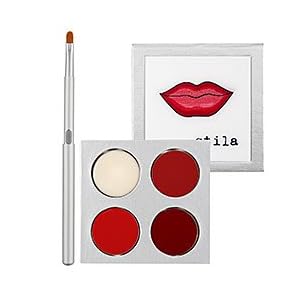
I had a really lovely birthday. I got a badass leather jacket in the mail from my mom, as well as trip to Nordstroms in a little silver box. My sister-friend mailed me new Stila red lipstick, the Stila Paris palette, and some Chocolate shortbread made from pure crushed cacao. I had to work, but I got to go with Shannon for some life-changing pumpkin cheesecake at the Cheesecake factory.

I was so delighted by the sweets and the bits of glamour, but it was the Coleman kids who gave me a great birthday. Faith and Zach, who are 6 and 8 respectively, stormed my room at 7am to wake me with a big "Happy Birthday!". Zach had arranged all my presents by "my seat" on the couch. Kaelyn had scribbled a giant "Happy Birthday" all over the mirrors that I use. There would be NO missing her salutations. And then, when I got my coffee and curled up on the couch, there was the big reveal of the Coleman birthday tradition: The Birthday Turtle. Here he is:


The birthday turtle sings "Happy Birthday" and marches around. Faith informed me that everyone in our family gets to have the Birthday Turtle sing to them. And there it was. Everyone in our family. On my birthday, the Coleman kids did all the things that mark the special days of family members.

When I lived in Florida, I loved my birthday because of the fuss my students made and the chance to throw a party. Even though we were too busy to spend time together often, birthday parties were not missed. Once a year, I could be surrounded by my favorite people. This is a really important occasion for a single person who lived alone. There was one day when the warmth and celebration was more powerful than the sense of solitude and loneliness.

This year, I didn't have to manufacture the occasion. When the warmth and celebration found me, I noticed the loneliness and solitude were gone for the first time in years. This year I got the birthday turtle because I'm part of something to celebrate--full time. Every day.

20 August, 2010

T is for Truth

I know. I skipped a few letters. I was having trouble with H. Even Jadepark, who inspired my list, had trouble with the Letter H. I am working on something, but there is too much going on to wrestle with that letter anymore. I have a list and I'll complete the 26 letters, but the sing-song order no longer feels like an imperative. So I forsake it.

And T is for truth.

Today, in the span of 30 seconds, I drove past a First Baptist church and a sign advertising a lecture event with Deepak Chopra. (The lecture was not at the church.) I moved to a place that has, what they call, a very inclusive definition of truth. It upholds a disorienting syncretism, attempting to bind together different, even opposing beliefs. A cosmic embrace of all religions is common here.

But as Ravi Zacharais identifies, truth in its nature is exclusive. Briefly explained, denying the exclusive nature of truth is, in itself, a truth claim that excludes its opposite.

This local breakdown in logic, I think, actually betrays an eagerness to answer the defining questions of Origin, Meaning, Morality, and Destiny. But mere "answers" to these questions are not enough.

Truth
is needed--truth on a grand scale with the power to eclipse all of the tiny, single, relativistic excuses for it that trap my post-modern neighbors in darkness.

But how does a person find truth when there are so many claims to it?

  1. Be Humble. The truth is more important than anything else, especially your pride. Often, pride masquerades as your pre-conceived notions of the truth. If what you already have is really the truth, it will stay without you having to hold on to it.

  2. Test EVERYTHING. It is important to fully explore for yourself everything that people offer to you as truth, with sincerity and humility. (see #1) Only when you have tested everything and retained what's good in it can you be confident in what you have.

  3. Look closely. Truth has two hallmarks: coherence, consistency.

    Coherence is what you seek when you work to thoroughly understand something. Does the idea or claim fully make sense within itself, or are there paralyzing contradictions? Does the truth answer thoroughly all the questions it, itself, poses? If it does not have these things, it will not be a truth you can live with. And I know you. You are not just looking for truth. You are looking for a truth you can live with..

    Consistency is your other measuring tool. Does the truth presented to you make "sense" fully to your mind? To your heart? To your life experience? If something is true, it flows with all three things.

    It is an idea if it only makes sense in your mind. It is a dangerous deceit if it makes sense in your mind, plumbs the depths of your heart, but does not match any part of your reality.

    It is passion if it only rings with your heart and not your mind, and foolishness if it rings with your heart and experience but not your mind.

    It is pride if it only matches your personal experience, and cynicism if it only matches your mind and experience but saddens your heart.

  4. Be Patient. Truth requires time to find. Does the thing maintain its consistency and coherence over time? Is what matches this moment what matches next season? Next year? Next phase in life? next era? Truth--the truth-- withstands time. Truth may not immediately match mind, heart, and experience without time for full revelation.
Only what walks instep with mind, heart, and experience over time is the truth.

04 July, 2010

F is for Fireworks

I've wanted to work in pyrotechnics since high school. My dad blames my high school chem teacher, Mr. Griffiths.

Griff was truly great. I had him only one or two years before he retired. Instead of languishing in the classroom, boring students and biding his time, he chose to blow things up. When I met him, he had no eyebrows because he had blown the windows out of the lab trying to make rocket fuel.

It's hard not to love a teacher whose demonstrations were too epic for even the fume hood. In the dead of Minnesota winter, Griff took us outside for "the important" demonstrations.

I can't even remember the principles he was illustrating with some of his biggest explosions. I think it's only the teacher in me now that extends him benefit of the doubt and assumes he even had some. But I do remember the lab that is the chemical rite of passage--the unknown element with the flame tests. We had copper--that most identifiable of elements that burns a bluish green.

After that, I was hooked. How could my calling be anything other than that of artistic explosions?? Put to music? Every year, on the Fourth of July, I'm inspired. I become convinced I've missed my calling.

Dad has never shared my convictions. When I went to far as to change my major to chemistry and seek an pyrotechnics internship, he threatened to end his support of my academic career. I have all of my fingers and toes to show for his wisdom.

As you watch the displays tonight, enjoy the greatest of flame tests. Say thanks to your chemistry teacher for inspiring and training the pyrotechnicians, and say thanks to all the dads who kept the rest of us from practicing.

And for your chemistry fun, here is a table of elements and colors, courtesy of the University of Wisconsin-Madison Chemistry Department:

Also, you can check out the PBS Nova site on the anatomy of fireworks.


Color Compound Wavelength (nm)
red

strontium salts, lithium salts
lithium carbonate, Li2CO3 = red
strontium carbonate, SrCO3 = bright red

652


orange

calcium salts
calcium chloride, CaCl2

668

yellow

sodium salts
sodium chloride, NaCl

610-621

green

barium compounds + chlorine producer
barium chloride, BaCl2

589

blue

copper compounds + chlorine producer
copper(I) chloride, CuCl

505-535

purple
mixture of strontium (red) and
copper (blue) compounds
420-460

silver burning aluminum, titanium, or magnesium

01 July, 2010

E is for Empty Space


I decided the empty space in my life needed renovating. It caused me a great deal of grief and anxiety, made worse by my poor attempts to fill it with the wrong things.

Slowly, I changed the way I thought about "emptiness".

I read an Annie Dillard piece about changing seasons--how she longed for "the North where unimpeded winds would hone me to a pure slip of bone." She says, "Winter is the real world, not the world gilded and pearled." The emptiness indicates a kind of purity, the completion of "a reduction, a shedding, a sloughing off."

"I stand under wiped skies directly, naked, without intercessors. Frost winds have lofted my body's bones with all their restless sprints to an airborne raven's glide. I am buoyed by a calm and effortless longing, an angled pitch of the will..."

I, too, am buoyed by a calm and effortless longing - it's the empty space. Once identified as such, I no longer needed to destroy the empty space by filling it.

Dillard continues, " The death of the self of which the great writers speak is not violent act. It is merely the slow cessation of the will's sprints and the intellect's chatter. It is waiting like a hollow bell with a stilled tongue...The waiting itself is the thing."

The bell can only ring because of the empty space between its tongue and the walls. And ring it will, but at the ordained moment - the waiting itself is the thing.

Maybe the empty space is less like a prison cell and more like a waiting room.

Henri Nouwen speaks of an important conversion for emptiness--that of loneliness to solitude. One of the hallmarks of my empty space had been what Nouwen calls an "essential aloneness which so often breaks into our consciousness as the experience of a desperate sense of loneliness...It drives us to demand more from our fellow human beings than they can give."

He instructs, "Instead of running away from loneliness and trying to forget or deny it, we have to protect it and turn it into solitude. To live a spiritual life, we must first find the courage to enter into the desert of our loneliness and to change it by gentle, persistent efforts into a garden of solitude. It is the movement from the restless senses to the restful spirit, the outward cravings to the inward-reaching search, from the fearful clinging to the fearless play."

I have become more certain of our innate resistance to empty spaces. My spiritual experience suggests that the more innate my resistance, the more likely my own will is working against my search for peace. The conversion of the dark and empty space to a brilliant garden of solitude is critical. Nouwen points out that "the temptation is indeed very great to take flight into an intimacy and a closeness that does not leave any open space. Much suffering results from this suffocating closeness." Instead of being driven by panic and despair to fill it, I've made a vigilant commitment to always maintain an empty room, with open windows to welcome the bitter, yet purifying North wind.

29 June, 2010

D is for Dublin

From Ireland 2009


A year ago I was in Dublin, completely alone. But no one is ever alone for long in Dublin. It is, by far, the most hospitable city I know. I had never been there and knew no one, but it never felt like that was the case.

A corner cop helped me locate my hotel, The Pembroke House. It's around the corner from the American Embassy, and it had an Italian concierge who laughed and smiled the way Italian men do at American women, but he also made sure I came back safely that night.

I walked all the way to Temple Bar to find a place that served food in the evening. Irish pubs, unlike English pubs, have kitchens with very limited hours. Touristy Temple Bar made dinner a possibility, it also made watching the USA-Brazil World Cup Qualifier with my countrymen, and Irishmen, a possibility. Dempsey and Donovan both scored and we were up at the half, which is NOT like anything we've seen in the World Cup itself. Guinness, football, "live music" by a cover-playing troubadour, friendly bartenders, and cheering work magic on the self-consciously alone. It was also my first taste of the Dublin magic that made it seem I had been there already before.

My first morning, I walked to Insomnia coffee on my way into the city. I was reading Paul Johnson's Ireland: A History when I was interrupted by Martin, "You're American, then?"
Damn. I was trying to blend in. "It's not you're fault, I lived in the States for years, I can spot an American with no trouble." I know. That's how I am with English people. I call it UKdar. I guess his would be USAdar.

I swear I am not making this up: Martin, a little younger, maybe, than my dad, worked for my dad's former company and knew my hometown. They knew some of the same people. Oddly, I felt like the fake, because all he was saying about his American experience was so familiar to me, he must have thought I was making up the points of commonality! Unlike Dublin, America is incomprehensible in size. How does someone meet a former Seagate employee and Bloomington MN resident an hour (ok, two if you count my lengthy morning routine) after waking up in a foreign city? It's Dublin.

The next day, I went to the National Gallery of Art. Now, I like to be alone in galleries. I wanted to travel alone in the first place so I wasn't rushed or interrupted. But it's Dublin. So I met a man who's as much a fixture of the museum as the Yeats National Collection, volunteer guard, Noel Clarke from Co. Sligo. He had to be 70 yrs old. His was the best small talk I've ever heard--polite chit-chat otherwise meaningless but for its ability to convey such genuine warmth. He says "there ought to be enough space in this world for people to say 'hello' to each other." He said he didn't know a thing about art, but he did know the stories of the paintings. His kind of hospitality with a worldwide presence in Art Museums would improve everyone's opinion of both art and museums.

I also met Barry, from High Fidelity--I mean, from Road Records, Dublin's installment of Championship Vinyl. His name was really Barry. He recommended a couple of cds and directed me to the indie music site, Whelan's Pub, that had previously hosted Damien Rice, Snow Patrol, and Glen Hansard. So the next night, I joined Dublin's open-mic singer-songwriter scene for the evening, even though I was the only one in the crowd who couldn't play the guitar and wasn't Irish. I made friends with a nurse, named Moira, who invited me to a pub "up the road" after the show. One difference between a folk night at Wheelan's and one at The Social: the whole place was drenched in sincerity. Folk-indie music fans everywhere, and not a smug hipster in sight. Half the perfomers were pretty good, half weren't, but no one was too cool to be there. Moira ventured it was because Dublin was so poor for so long, that no one learned how to put on pretense. Sincerity and friendliness were innate to the culture. Any Singer-songwriter scene has an intense localism to it - you know the ones that belong to your city, that you can see. In Dublin, it was all the lovely localism but, for me, none of the nativism.

The show ended early and I walked home, only to be drawn into another pub where trad music spilled onto the street. The bar had a dozen pints of Guinness in a line, already half pulled, just begging someone to come request the rest. What's more welcoming than that? The source of the music was half a dozen musicians around a table in the corner, who finished up their tune, then introduced themselves to each other. They had just made great music together as total strangers! The anthem of Dublin hospitality! I stood with a stomping, clapping crowd until the pub closed.

Truly, no one is alone in Dublin.


My Dublin Top-five:

22 June, 2010

C is for Culture

5And he that sat upon the throne said, Behold, I make all things new. And he said unto me, Write: for these words are true and faithful. Revelation 21:5 (KJV)

8 Finally, brethren, whatever things are true, whatever things are noble, whatever things are just, whatever things are pure, whatever things are lovely, whatever things are of good report, if there is any virtue and if there is anything praiseworthy—meditate on these things.
Philippians 4:8 (New King James Version)


C is for Culture.

One of my heartaches regarding Central Florida is the lack of culture here. As an English Literature major an amateur musician and Art History teacher, I live for it. When I first moved here, one of my coworkers tried to convince me there was culture, but I just had to get used to the local kind. Anyone passing through Daytona can see the temple to what he's talking about--it can hold half a million people who live to watch people drive in circles, really fast. No. That is not culture.

Culture is NOT shirtless overall-wearin', gin-jug totin', toothless gator-shooters celebrating their lawn trash.

Yet, culture is NOT the high-minded post-modern celebration of human depravity such as Chris Ofili's The Holy Virgin Mary a collage of Mary incorporating cut-outs from pornographic magazines and shellacked clumps of elephant dung. Art is often tasked with raising controversy, but in every literal way, this is just shit.

And still, culture is NOT, as Franky Schaeffer writes in Addicted to Mediocrity, * (and as a recovering Christian-retail worker, I love this list, so here's the whole thing!) "the contents of your local Christian bookstore-accessories-paraphernalia shop:

For the coffee table, we have a set of praying hands made out of some pressed muck. Christian posters are ready to adorn your walls with suitable graffiti to sanctify them and justify the expense... Perhaps a little plastic cube with a mustard seed entombed to boost your understanding of faith... And if this were not enough, there's a toothbrush with a bible verse stamped on the plastic handle... And a comb with a Christian slogan or two impressed on it.

...On a flimsy rack are stacked a pile of records. You may choose one at random, blindfolded, for most of them will be the same idle rehash of acceptable spiritual themes, endlessly recycled as pablum for the tone-deaf, television-softened brains of present-day Christians...

...And finally, the publishing houses churn out (measured by the ton) a landslide of material which can scarcely be called books, often composed of the same themes which are viewed as spiritual, slopped together by 'writers' who would be better employed in another trade."


For rednecks, post-moderns, and especially Christians, it is crucial for the redemption of all things that we find true culture.

So if it isn't any of this, what is it?

Matthew Arnold, an English Victorian poet, social-reformer, and critic defined in his book Culture and Anarchy, "Culture is, or ought to be the study and pursuit of perfection; perfection of beauty and intelligence, where Sweetness and Light are the main characters."

Arnold goes on to argue that only culture of this kind has the power to shape a society--to correct the worst effect of laissez-faire capitalism among social classes, the neglect of the common good. With a collective celebration of Intellect and Beauty for their own sakes, people would be reminded what was good and so be motivated to strive for it.


Arnold was talking about culture chiefly for pseudo-political purposes, the stabilization of a turbulent British society. I think he has the right definition of it, a correct assessment of its power, but aiming toward the wrong end.


Instead, Christians should be working within culture to redeem it and use the best of it to point people back toward the Source of all good things. Christians should break down the sacred-secular divide with their participation in and celebration of all things excellent.

Our post-modern society is marked by individualism and its only end is man's right to do as he pleases for himself. We need something more powerful than that if we are going to make a transforming difference.

Beauty and Intellect are the meeting point between this kingdom where man is god and the Kingdom of God as described by the Gospel.

The beginning of this celebration of intellect and beauty, Sweetness and Light, is marked by the Hellenistic Golden Age in Greece. Greek humanism held intellect and beauty as its highest virtues. We need Christians to be nourished by this tradition of humanism, without being Humanists. As Christians, we know man is not the measure of all things, the Son of Man is.

All things will be made new. God's kingdom will reverse this world's momentum of decay. People, nature, politics, art, relationships--all of it-- will be redeemed.

Christians have an immediate role to play in this redemption: We must use the Truth we have to stop the best of this world from spoiling, not be content with the mediocre. The Gospel deserves the highest creativity and human expression we can muster, and we must use the high accomplishments of creativity and expression as pathways to the Gospel.

We are called to be the Salt and Light, after all. Let's get to work.


*Addicted to Mediocrity was written 25 years ago. Since then, it's important to fairly note the strides Christians have made in music and art--however small.

16 June, 2010

B is for Basketball

I am writing this as I watch Game 6 of the NBA Finals--cheering for anyone playing the Celtic, as I was instructed to do.

This spring, to the amazement of everyone around me, I learned to follow a sport. Basketball.

It's no secret that I am a stranger to the sports world, and this certainly didn't change that. It's also no secret that I didn't pay attention to basketball for the love of the game.

I was blessed this year to have nearly the entire MVA varsity team in class. They truly are a group of extraordinary men. In class and out of it, they are smart, challenging, funny, and considerate men who made my classes more interesting and enjoyable. I appreciated them as students so much, that appreciation overflowed into one for them as athletes--sort of.

The Junior class fundraisers more or less mandated me to be at every home game--which is fine because I loved cheering for these guys. I just didn't know what I was doing. I loved them, but I had no idea if these guys were playing well or poorly. I could deduce the basics of basketball, sure, but that's not enough to connect with them in, for many of them, their most important place of performance. It felt so strange to care so much about something I knew so little about!

So I did what all teachers (not really) would do in my situation: I made a class project out of my NCAA March Madness brackets. These basketball guys helped me with my bracket picks, and we did a debrief about the previous night's games in the morning. I watched the games with a notebook and would bring in my commentary and questions. Five weeks of this, and I am a basketball Jedi. ( Ok. Maybe Not. But I can now give a decent play-by-play using the right terminology.)

It's true that I live to learn and Basketball gave me a new subject to explore. It is true that I have an uncommon affection for my students in general, and I would have cheered for these terrific guys if they had chosen to be mimes in boxes. And it is true that it's very easy to cheer for a team that enjoyed the success and exposure that ours did this year.

But more than all this, Basketball for me was my Missio Dei. To develop some basketball expertise was to become indigenous to my student culture. I maintain a Facebook and text-message like my life depends on it for the same reason. I even adapt my playlists and learn to love the music they love in order to love my students better.

Basketball became crucial to my scheme of what's called Missional Living.

According to Floyd McClung, former director for Youth with a Mission,

"Missional living is about investing in the lives of other people. It is not a program. It is certainly more than organized outreach activities. Being a missional person means intentionally building bridges to other people – for the sake of them knowing Jesus and discovering what it means to be a fully alive, free human being. It is an attitude that says, "I will invest my life in others for the sake of Christ and his purposes on earth." It means I will live that way in every sphere of life and every day of the week."

And according to Dr. Ed Stetzer and Phillip Nation in their book Compelled by Love,

"
In an alliterated sense, missional living is an incarnational (being the presence of Christ in community), indigenous (of the people and culture) and intentional (planning our lives around God's agenda) focus on the power of the Gospel to bring the reign of God into people's lives."

Nation and Stetzer also directed me toward 2 Corinthians 5:14-15 & 18:

"For the love of Christ controls us, having concluded this, that one died for all, therefore all died; 15and He died for all, so that they who live might no longer C)">live for themselves, but for Him who died and rose again on their behalf... 18Now all these things are from God, who reconciled us to Himself through Christ and gave us the ministry of reconciliation."

I started attending a bible study (of sorts) with my basketball players, and we had open and important conversations about faith and reason and even race and culture (Did I mention most of them were West African?) --the kind of where Jesus shows up and we see a glimpse of eternity. The kind where true reconciliation of race and gender and culture and age and lost and found really begins. I had the privilege of exploring the truth of the Gospel as it applies to all things--even basketball.

And--as a surprise blessing--I am amazed by the power and art of this sport. I can't believe those jump shots go in from 40 feet away. It's exhilarating to see the ball run up the court so fast, and when they catch those passes from half a court away and drive in to the basket with precision and agility--fireworks!

For me, I saw there is church and basketball because there is Mission.

Missio Dei.

Amen.

15 June, 2010

A is for Annie Dillard, Continued

In my last post, I mentioned that Annie Dillard wrote my favorite two pages in anything I've ever read. I don't know if they'll be as powerful for you as they were for me, and I'm sure I don't have permission to post them, but there they are:

Thomas Merton wrote, "There is always a temptation to diddle around in the contemplative life, making itsy-bitsy statues. " There is always an enormous temptation in all of life to diddle around making itsy-bitsy friends and meals and journeys for itsy-bitsy years on end. It is so self-conscious, so apparently moral, simply to step aside from the gaps where the creeks and winds pour down, saying, I never merited this grace, quite rightly, and then to sulk along the rest of your days on the edge of rage. I won't have it. The world is wilder than that in all directions, more dangerous and bitter, more extravagant and bright. We are making hay when we should be making whoopee; we are raising tomatoes when we should be raising Cain, or Lazarus.

Ezekiel excoriates false prophets as those who have "not gone up into the gaps." The gaps are the thing. The gaps are the spirit's one home, the altitudes and latitudes so dazzlingly spare and clean that the spirit can discover itself for the first time like a once-blind man unbound. The gaps are the clifts in the rock where you cower to see the back parts of God; they are the fissures between mountains and cells the wind lances through, the icy narrowing fjords splitting the cliffs of mystery. Go up into the gaps. If you can find them; they shift and vanish too. Stalk the gaps. Squeak into a gap in the soil, turn, and unlock-more than a maple-a universe. This is how you spend this afternoon, and tomorrow morning, and tomorrow afternoon. Spend the afternoon. You can't take it with you.

I live in tranquility and trembling. Sometimes I dream. I am interested in Alice mainly when she eats the cooky that makes her smaller. I would pare myself or be pared that I too might pass through the merest crack, a gap I know is there in the sky. I am looking just now for the cooky. Sometimes I open, pried like a fruit. Or I am porous as old bone, or translucent, a tinted condensation of the air like a watercolor wash, and I gaze around me in bewilderment, fancying I cast no shadow. Some-

Page 2

PILGRIM AT TINKER CREEK

times I ride a bucking faith while one hand grips and the other flails the air, and like any daredevil I gouge with my heels for blood, for a wilder ride, for more.

There is not a guarantee in the world. Oh your needs are guaranteed, your needs are absolutely guaranteed by the most stringent of warranties, in the plainest, truest words: knock; seek; ask. But you must read the fine print. "Not as the world giveth, give I unto you." That's the catch. If you can catch it it will catch you up, aloft, up to any gap at all, and you'll come back, for you will come back, transformed in a way you may not have bargained for-dribbling and crazed. The waters of separation, however lightly sprinkled, leave indelible stains. Did you think, before you were caught, that you needed, say, life? Do you think you will keep your life, or anything else you love? But no. Your needs are all met. But not as the world giveth. You see the needs of your own spirit met whenever you have asked, and you have learned that the outrageous guarantee holds. You see the creatures die, and you know you will die. And one day it occurs to you that you must not need life. Obviously. And then you're gone. You have finally understood that you're dealing with a maniac.

I think that the dying pray at the last not "please," but "thank you," as a guest thanks his host at the door. Falling from airplanes the people are crying thank you, thank you, all down the air; and the cold carriages draw up for them on the rocks. Divinity is not playful. The universe was not made in jest but in solemn incomprehensible earnest. By a power that is unfathomably secret, and holy, and fleet. There is nothing to be done about it, but ignore it, or see. And then you walk fearlessly, eating what you must, growing wherever you can, like the monk on the road who knows precisely how vulnerable he is, who takes no comfort among death-forgetting men, and who carries his vision of vastness and might around in his tunic like a live coal which neither burns nor warms him, but with which he will not part.

          * * *

14 June, 2010

A is for Annie Dillard

If you spend any time at all in conversation with me, guaranteed I reference this author. It's no secret that I really like Dillard - her voice resonates in me like it's coming from my own chest. She starts the conversation between her readers and their everyday worlds, and it continues long after the reader closes the book.

I finally finished Pilgrim at Tinker Creek this spring, about a year after I started it. Its a series of illuminating personal essays--meandering responses to nature and the rest of Dillard's solitary, literary world. It's image-saturated prose that's carried by a poetic cadence toward transcendence, turning and directing itself like flowing water. Her writing has the honesty and power of something that is both fully human and fully vision. It's the most truthful writing I've ever read.

And I love the truth.

God, I want to write like that.

Dillard says "Poets read poetry; novelists read novels." Dillard wrote my favorite two pages of anything I've ever read. Reading her changes the way I see--even breathe. If a writer often defines herself by what she reads, what does that make me? Nothing, because I haven't been writing. Writers write, but I haven't been because I've been too self-conscious about lack of talent and poor craft. Dillard explains this, " You try, you try every time to reproduce the vision- to let your light so shine before men. But you can only come a long with a bushel and hide it."

If that's the case, why bother?

She answers, "Because acting is better than being here in mere opacity."

Really, the only people who read my writing are family and friends--and there's a paradox there. They're the hardest to write for - they're people to whom I feel compelled to prove something. There's a fear that I can't write well enough to earn their approval and respect. But this kind of concern misses the point entirely.

To whom did Jesus do most of His teaching? His closest friends and family--the disciples. More of Christ's conversation and lessons were directed toward the people who knew Him best. He didn't aim for fame or notoriety, or even polished delivery. He aimed to save his own people--to serve His fathers Vision.

Do I actually think the clumsiness (at best) of my writing is worse than not serving the Father's vision with the capabilities He bestowed on me?

Among many, many things, Dillard reminded me that serving the vision is more about trusting Power is made perfect in weakness than any other measurement of success.

God did not give us "a spirit of timidity, but of power, love, and self-discipline."

A is for Annie Dillard, but there is a great chance she'll show up in other letters, too. Just watch.

13 June, 2010

Coming Back

I'm embarrassed by my posting performance for the six months - maybe this whole year. I'm not embarrassed because I think I'm letting anyone down - heavens no, there's only a handful of people who read this - I'm embarrassed because I should have made a better public record of all I've learned and read and taught.

I should have deemed the lessons important enough to write out, organize, and post properly. I shouldn't have been so self-conscious about how I write and let that deter me from sharing new insights. Sometimes learning from reading keeps God from having to teach me with "the hard way". If I am sometimes spared the "hard way" by reading, maybe I should write more and other people can be spared my same lessons by reading.

Or maybe that's not how it works.

I am inspired by Jadepark's alphabet list--though her focus is more of a memoir. I think I need something to get me started--something that lets me move forward and backward in the chronology of things. I think I'll do an alphabet list of lessons.

I'm a teacher, after all--alphabets, plans, lists, and lessons are the nasty side effects of our trade.